Any discussion is welcome.
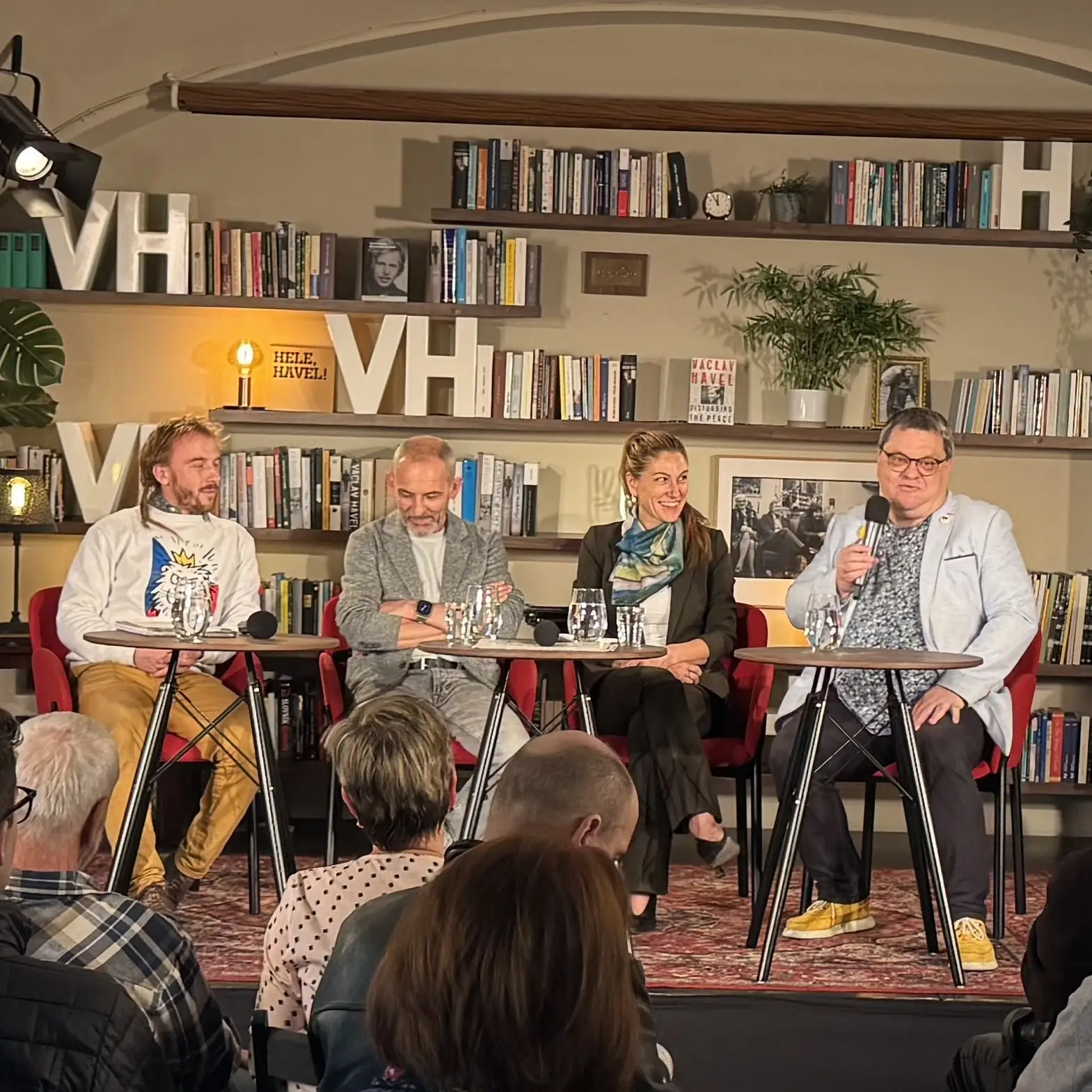
Of course, it is possible to gather information from social media. It’s easy, doesn’t require much effort, and, moreover, if you’re even slightly careful about choosing “friends” for your network, you won’t be in for any unpleasant surprises. A perspective from the other side of the ideological spectrum is unlikely and tends to appear only in comments, unless the inattentive author of an occasional confrontational post forgets to turn it off. Within their own society, social media users are thus satisfied that the visible majority holds similar or even identical views on everything important. Online life does not automatically offer easy ways to verify the facts, data, and figures presented, and so everything flows along peacefully. A slightly different form of cognition involves attending debates, seminars, workshops, or conferences, where the participant looks the speaker in the face, perceives the reactions of other attendees, and feels the energy generated by the physical presence of those interested in the topic being presented. They participate, even if silently, in the collective absorption of knowledge delivered in a way that is ideal for a perceptive person: actively. Historian and philosopher Petr Hlaváček’s project “Circus Europe” offers the opportunity to hear the views of prominent figures on a selected topic. Yesterday’s topic was “Political Parties and Civil Society“, with the aim of getting to the bottom of the current state of political culture in the Czech Republic and Europe and reaching a conclusion as to whether political parties as an institution will survive, what state they are in, and what state they could be in if… And also what state they should be in.
The panelists were Eva Decroix, Jan Dobrovský, and Mikuláš Minář; the discussion was moderated by Petr Hlaváček. Although some responses could have been a bit more direct in proposing possible solutions to the current bleak situation, most of what was said came across as rational. The civilized debate, free of sharp clashes of opinion, was pleasant, though it could hardly be said to reflect the overall mood of society, which exhibits significantly less tolerance, humility, and respect than would be necessary for the successful development of a more civilized political scene.